Blog
Harad, Baheda and Amla Powder: Benefits, Uses & Triphala Guide

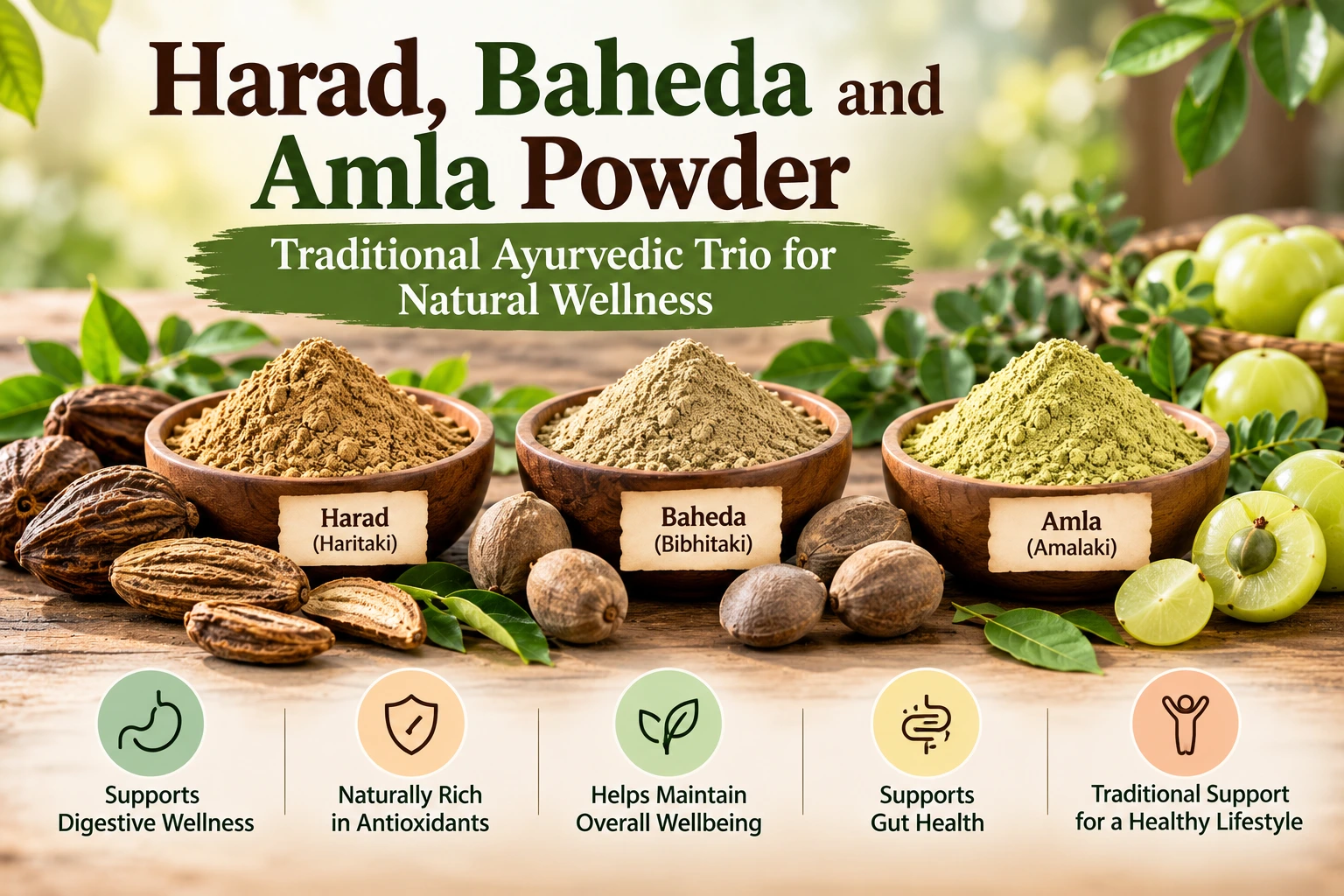
Harad, Baheda and Amla are three traditional Ayurvedic fruits that are widely known for their role in Triphala, a classical herbal formulation. Each fruit has its own characteristics and traditional uses, and together they form a combination that has been used in Ayurveda for generations.
If you are exploring Harad, Baheda and Amla powder, understanding these three ingredients can help you learn more about Triphala, its traditional uses and what to consider when choosing a quality product.
What Is Harad, Baheda and Amla Powder?
Harad, Baheda and Amla are dried fruits used in traditional Ayurvedic preparations. Their botanical names are Terminalia chebula, Terminalia bellirica and Phyllanthus emblica, respectively.
These fruits are commonly associated with Triphala, whose name refers to a combination of three fruits.
- Amla (Indian Gooseberry): Known for its naturally occurring vitamin C in fresh fruit and its various plant compounds.
- Harad (Haritaki): Traditionally used in Ayurvedic preparations, particularly those associated with digestive health.
- Baheda (Bibhitaki): Another traditional Ayurvedic ingredient valued for its role in herbal formulations.
The composition and nutrient content of dried powders can vary according to processing and storage. Also, a product containing all three ingredients may differ in its proportions and preparation.
Health Benefits of Harad, Baheda and Amla Powder
Harad, Baheda and Amla have a long history of traditional use in Ayurveda. Research has investigated several compounds found in these fruits, although strong human evidence for many specific health claims remains limited.
1. Supports Traditional Digestive Wellness
Triphala is traditionally used in Ayurveda to support digestive regularity. Harad is particularly associated with traditional digestive preparations.
However, individual responses can differ, and Triphala should not be considered a guaranteed treatment for constipation or other digestive conditions.
2. Provides Naturally Occurring Plant Compounds
Amla, Harad and Baheda contain various naturally occurring plant compounds, including polyphenols and tannins. Their composition differs by fruit and processing method.
These compounds have been studied for antioxidant activity, but laboratory findings alone do not establish that consuming the powder prevents or treats disease.
3. Adds Variety to Traditional Herbal Routines
For people interested in traditional Ayurvedic ingredients, the three-fruit combination offers a way to explore a formulation with a long history of use.
It is best approached as a complementary part of a balanced lifestyle rather than a substitute for nutritious food, appropriate medical care or prescribed treatment.
4. Brings Three Distinct Fruits into One Formulation
One reason Triphala is widely recognised is that it combines three different fruits instead of relying on a single botanical ingredient. Each fruit has its own traditional background and chemical composition.
The benefits of a finished formulation depend on its actual ingredients, proportions, quality and how it is used.
Traditional Uses of Amla, Harad and Baheda
Amla: The Indian Gooseberry
Amla is widely used in Indian food traditions and Ayurvedic preparations. Fresh amla is known for its vitamin C content, while dried products may have different nutrient levels depending on processing.
Harad: A Traditional Ayurvedic Fruit
Harad, also known as Haritaki, has a long history of use in Ayurveda. It is traditionally associated with digestive wellness and is included in a variety of classical herbal preparations.
Baheda: An Ingredient in Classical Herbal Formulations
Baheda, also called Bibhitaki, is another fruit used in traditional Ayurveda. It is most familiar to many consumers as one of the three ingredients in Triphala.
As with other herbal ingredients, its traditional uses should be distinguished from health effects established through high-quality clinical research.
Triphala Powder
Triphala is a traditional Ayurvedic formulation made using Amla, Harad and Baheda. It is commonly available as powder, tablets and other preparations, depending on the manufacturer.
People exploring Triphala often want to understand what it contains, how it differs from individual fruit powders and how to choose a product with clear ingredient information.
When comparing products, check the ingredient list and the stated proportions if available. Do not assume every Triphala product has the same formulation or concentration.
Best Ways to Use Triphala Powder
If you are considering Triphala powder, the appropriate method of use depends on the product’s formulation and label directions.
Common preparations may include mixing the powder with water, but you should follow the specific instructions supplied by the manufacturer or a qualified healthcare professional.
Before using it, consider the following:
- Read the recommended serving instructions carefully.
- Do not assume that a larger quantity will provide greater benefits.
- Avoid combining multiple herbal supplements without checking for possible interactions.
- Seek professional advice if you have a medical condition or take regular medication.
Best Time to Take Triphala Powder
Some traditional routines use Triphala at particular times of the day, but there is limited high-quality evidence establishing one universally best time for everyone.
The appropriate timing may depend on the product directions, your individual needs and advice from a qualified healthcare professional. If you experience digestive discomfort, stop using the product and seek advice if symptoms persist.
How to Choose Good-Quality Triphala Powder
When buying Triphala powder online in India, consider these points before placing an order:
- Clear ingredient list: Confirm that the product lists Amla, Harad and Baheda.
- Transparent product details: Check the net weight, batch number, manufacturing date and expiry or best-before date.
- Quality information: Look for relevant testing and quality documentation where available.
- Suitable packaging: Choose packaging that protects the powder from moisture and contamination.
- Reliable product information: Prefer brands that explain their ingredients, storage instructions and recommended use clearly.
Conclusion
Harad, Baheda and Amla are three traditional Ayurvedic fruits that come together in Triphala. Understanding their individual characteristics, traditional uses and role in the formulation can help you make a more informed product choice.
When selecting Triphala powder, pay attention to the ingredient list, product quality information, storage instructions and recommended use. Choose products with transparent labelling and approach health claims thoughtfully.
Explore himalayanayurvedaandherbals to learn more about its available herbal products and review the details of its Triphala powder before deciding whether it suits your needs.
Frequently Asked Questions About Harad, Baheda and Amla Powder
Are Harad, Baheda and Amla the ingredients of Triphala?
Yes. Triphala is traditionally made from three fruits: Harad (Haritaki), Baheda (Bibhitaki) and Amla (Amalaki). The proportions and preparation can vary between products.
What is the difference between Triphala and individual fruit powders?
Triphala is a combination of all three fruits, while an individual fruit powder may contain only Amla, Harad or Baheda. Always check the ingredient list to confirm the formulation.
Can Triphala powder be used every day?
Whether regular use is appropriate depends on the product, serving instructions and individual health circumstances. Follow the label directions and seek professional advice if you take medication or have a medical condition.
What is the best way to consume Triphala powder?
Follow the manufacturer’s directions for the particular product. Mixing powder with water is one common method, but the appropriate preparation and quantity can differ.
How should Triphala powder be stored?
Keep the powder in a tightly closed container in a cool, dry place, away from moisture and direct sunlight. Follow any additional storage instructions on the product label.